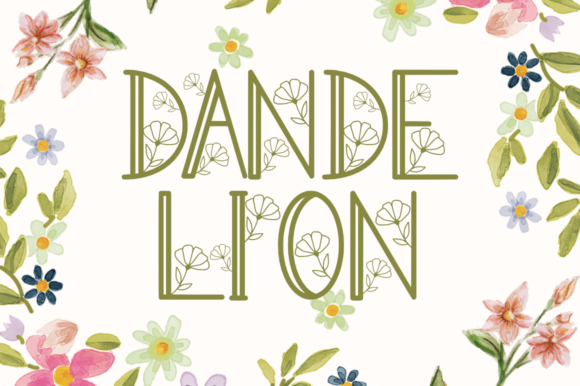
Dandelion: A Simple and Delicate Decorative Font for Personalized Designs
When you first encounter the Dandelion font, it feels like discovering a hand-drawn secret. Its thin, airy strokes curve with a natural rhythm that reminds you of calligraphy made with a fine nib, yet it carries an organic looseness that is both charming and intentional. Dandelion is not a font that shouts for attention; it whispers with elegance. This makes it a beloved choice for projects where personality and a soft, personal touch matter more than corporate uniformity. Whether you are planning a wedding, launching a small creative business, or simply want to make a card feel truly special, understanding what Dandelion offers—and where its limitations lie—can help you decide if it is the perfect match for your work.
The Character of Dandelion: More Than Just a Pretty Font
At its core, Dandelion is a simple and delicate decorative font. Its lowercase letters often feature long, sweeping ascenders and descenders, giving text a flowing, airy feel. The uppercase letters are slightly more structured but maintain the same whimsical touch. Unlike many decorative scripts that feel rigidly formal, Dandelion has a relaxed quality that makes it approachable. The weight is light, almost like a pencil sketch, which is why it works beautifully on backgrounds where you want the font to float above the design rather than anchor it.
One of the key features of Dandelion is its versatility within a specific niche. It is not a font for long paragraphs or dense text; its beauty lies in short headlines, names, dates, and key phrases. The font includes standard punctuation and numerals, though some special characters may have a playful twist. For designers, this means Dandelion can be used reliably for titles and accents without worrying about missing glyphs. Its delicate nature also means it pairs well with heavier, more neutral fonts—a solid sans-serif or a clean serif can ground Dandelion’s airiness, creating a balanced composition.
Real‑World Uses: Where Dandelion Truly Shines
Because of its personality, Dandelion is not a font you use for everything. But when the context calls for a gentle, romantic, or handcrafted feel, it becomes the star of the show. Below are some of the most common and effective applications:
- Wedding invitations and stationery – The most natural fit. Dandelion evokes the delicate details of lace, florals, and handwritten calligraphy. Use it for the couple’s names, the date, and key phrases like “together with their families.”
- Thank‑you cards and greeting cards – A handwritten look adds sincerity. Dandelion printed on a textured cardstock feels personal and warm, ideal for expressing gratitude.
- Logos for personal brands and small businesses – If your brand identity is soft, feminine, or nature‑inspired, Dandelion can be a memorable wordmark. Florists, bakeries, wedding planners, and artists often choose it.
- Social media graphics – For Instagram quotes, Pinterest pins, or Facebook cover images, Dandelion adds a dreamy, editorial aesthetic. Keep the text short—a sentence or less.
- Invitations to baby showers, bridal showers, and birthdays – Any celebration that calls for a light, joyful tone can benefit from Dandelion’s softness.
- Decorative elements in digital products – Use Dandelion for titles in planners, journals, or website headers where you want a touch of artistry without overwhelming the rest of the content.
Beyond these common uses, Dandelion appears in craft projects, wall art, and even tattoo designs. Its thin lines translate well onto fabric and paper, making it a favorite among DIY creators who value a bespoke look. The key is to use Dandelion sparingly and let its unique form stand out.
Who Benefits Most from Using Dandelion?
While anyone can enjoy the font, certain groups find Dandelion especially valuable for their work and personal projects.
- Professional graphic designers – They appreciate having a decorative option that is not overly complex. Dandelion offers a quick way to inject elegance without spending hours customizing letters.
- Wedding and event planners – Using Dandelion across save‑the‑dates, invitations, and thank‑you notes creates a cohesive and romantic brand for the event.
- Small business owners in creative fields – Whether you sell handmade jewelry, organic skincare, or calligraphy prints, Dandelion can become part of your visual identity.
- Couples and families planning personal events – Non‑designers can easily use Dandelion in templates or with basic software to create professional‑looking stationery without hiring a professional.
- Content creators and bloggers – For a blog header or an Instagram highlight cover, Dandelion gives a curated, elegant look that stands out from standard system fonts.
Strengths and Considerations: What to Keep in Mind
Dandelion’s strengths are clear, but like any tool, it has limitations. Understanding them will help you avoid common pitfalls and get the best result from the font.
Strengths
- Visual elegance – Few fonts capture such a delicate, handcrafted feel. Dandelion immediately communicates beauty, care, and attention to detail.
- Uniqueness – It is not overused like some popular scripts, so your design will feel original and personal.
- Versatility within its niche – Works well in both print and digital contexts, as long as the text size is appropriate.
- Easy to pair – Because it is light and ornamental, it leaves room for a secondary font to do the heavy lifting in body text.
Considerations and Limitations
- Readability at small sizes – Dandelion’s thin strokes can become barely visible below 14pt or 16pt, especially in print. Avoid using it for fine print, addresses, or long descriptions.
- Not suitable for body text – Any paragraph longer than a few words will be difficult to read. Always pair Dandelion with a clear, readable font for the main content.
- Limited character set – Some versions of Dandelion may not include extended Latin characters, ligatures, or alternate glyphs. Check before using for languages other than English.
- Requires careful spacing – The light weight means that tight tracking can make letters touch, while too much space can make them look disconnected. Manual kerning adjustments are often needed for logos.
- Digital rendering challenges – On low‑resolution screens, Dandelion can appear jagged or faint. For web use, test at larger sizes and consider using a fallback font for smaller text.
Practical Expectations: Using Dandelion in Real Projects
Bringing Dandelion into a project is more than just selecting it from a dropdown menu. To make it shine, think about the medium, the material, and the company it keeps.
For print: Dandelion performs beautifully when printed on thick, uncoated paper. The ink absorbs slightly, softening the edges and mimicking real handwriting. For wedding invitations, try pairing Dandelion with a classic serif like Garamond or a modern sans-serif like Montserrat. Use Dandelion only for the couple’s names and the main headline; use the paired font for all supporting text. Keep the font size between 18pt and 36pt for optimal legibility. If you are printing very small (like envelope addresses), choose a different font entirely.
For digital use: When using Dandelion on a website or in an app, ensure the text is at least 24px. For headers, 36px or larger works best. You can embed Dandelion via web font services, but be aware that it may load more slowly than common fonts. Alternatively, use Dandelion in a graphic saved as an image (PNG or SVG) to maintain control over rendering. For social media, Dandelion can be applied in tools like Canva or Adobe Spark; just resize carefully so the delicate lines remain visible on mobile screens.
Pairing suggestions: Dandelion pairs exceptionally well with simple, clean fonts. Here are a few combinations that designers commonly use:
- Dandelion + Lato – Lato’s humanist sans-serif balances Dandelion’s ornamentation with warmth.
- Dandelion + Playfair Display – A high‑contrast serif that adds a classic, refined contrast.
- Dandelion + Open Sans – A neutral, modern sans that never competes for attention.
- Dandelion + Cormorant Garamond – For an elegant, all‑serif pairing that still feels light.
Evaluating if Dandelion Is Right for Your Project
Before committing to Dandelion, ask yourself a few practical questions. This will help you decide whether the font aligns with your goals and your audience’s expectations.
- What is the tone of your project? If you are aiming for formal, serious, or corporate, Dandelion may feel too whimsical. But if you want romantic, tender, or creative, it is a strong choice.
- Who is your audience? Older audiences or those with visual impairments may struggle with thin fonts. For a younger, design‑savvy crowd, Dandelion can feel fresh and artistic.
- What is the medium? Will it be printed on matte paper, displayed on a retina screen, or embroidered on fabric? Test a sample in the actual medium before finalizing.
- How long is the text? Dandelion works for one to ten words. Anything longer becomes cluttered. If you need to convey more information, use Dandelion only as a decorative accent.
- Do you have the skills to adjust spacing? If you are a beginner, Dandelion might require more fussing than a bolder, simpler font. Consider using a template or hiring a designer if the outcome is critical.
Testing is essential. Print a few lines at different sizes, view them on different screens, and show them to a friend whose opinion you trust. Dandelion has a distinct personality that not every project can support, but when it fits, it elevates the design to something truly memorable.
Final Thoughts: Embracing the Delicacy of Dandelion
Dandelion is a font that invites you to slow down and appreciate the details. Its simple, delicate strokes bring a human touch to an increasingly digital world. Whether you are crafting a wedding invitation that will be kept as a keepsake, designing a logo for a passion project, or writing a thank‑you note that feels genuinely heartfelt, Dandelion can help you communicate warmth and care. As with any specialized tool, its power comes from knowing when and how to use it. By respecting its limitations—small sizes, limited readability for long text, and the need for thoughtful pairing—you can let Dandelion do what it does best: add a layer of quiet beauty to your work. Explore it, test it, and let it inspire your next personalized design.